Posts

Showing posts with the label cervical cancer

Bone marrow Biopsy

Image
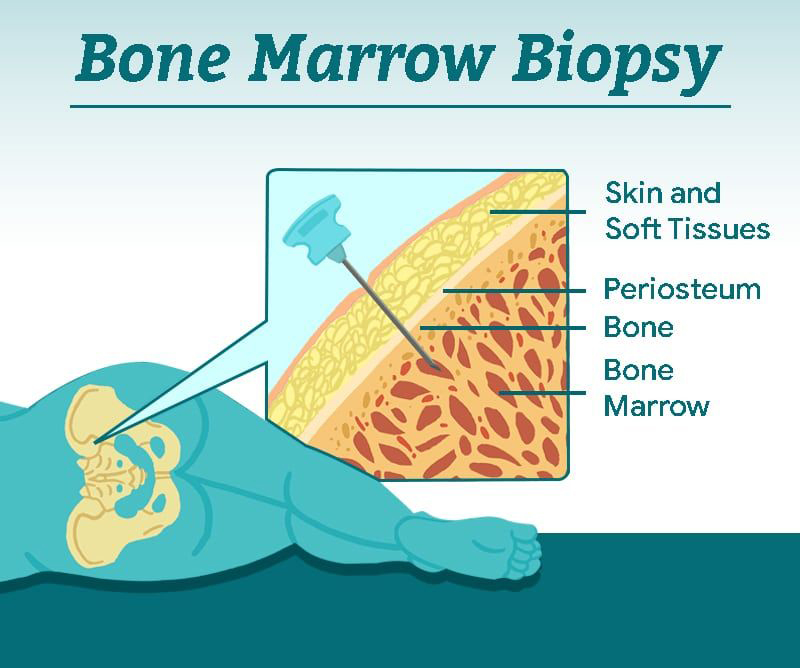
  Bone marrow biopsy (BMB) FAQs! Ever wondered what it's all about? Keep reading... 👀 What makes up a BMB? Usually it includes 2 samples - the aspirate (liquid marrow ðŸĐļ) and the trephine (bone core ðŸĶī) Why do we need 2 samples? The aspirate allows us to individually look at each BM cell under the microscope 🔎 (e.g. WBCs, RBCs) and classify them via flow cytometry (a method of identifying and measuring pathological cells using their surface markers e.g. CD19 for B-cells) The trephine lets us look at the way the BM is organised and assess for things like fibrosis and infiltration. We can also apply stains 🖌 (immunohistochemistry) to detect specific cells on the trephine How is it done? It is a quick (20-30 min) awake procedure using local anaesthetic. It does not require a theatre and is often done at the patient bedside. It is done aseptically using 2 separate needles 💉 (aspirate and trephine). Where do you take the samples from? Most times we manage to get samples from the pos...

UPDATED RECOMMENDATIONS FOR BREAST CANCER SURVEILLANCE IN YOUNG FEMALE CANCER SURVIVORS

Image
  Updated Recommendations for Breast Cancer Surveillance in Young Female Cancer Survivors William J. Gradishar, MD reviewing Mulder RL et al. J Clin Oncol 2020 Dec 10 Surveillance is now strongly recommended for survivors treated with ≥10 Gy chest radiation — a change from ≥20 Gy. In 2013 the International Late Effects of Childhood Cancer Guideline Harmonization Group (IGHG) published evidence-based recommendations for surveillance of female survivors of childhood, adolescent, and young adult (CAYA) cancer who were treated with radiation to fields that potentially involved breast tissue on the chest wall. Based on new evidence, IGHG has updated its breast cancer surveillance recommendations. BOOK APPOINTMENT Modified recommendations include the following: Mammography and breast MRI should be performed at least annually up to age 60 for survivors treated with ≥10 Gy chest radiation (strong recommendation) and for those treated with upper abdominal radiation that exposed breast tiss...

Cervical Cancer - Indian Scenario

Image
Cervical cancer Cancer is the uncontrolled growth of body cells and can start almost anywhere in the human body. When cancer develops in the cervix of female it is termed as cervical cancer or cancer cervix. Cervix is the lower part of the uterus and connects the body of the uterus to the vagina (birth canal).The lower part of the cervix (ectocervix) lies within the vagina and the upper two thirds of the cervix (endocervix) lies above the vagina. Most cervical cancers originate in the area where the endocervix and ectocervix join. BOOK APPOINTMENT Cervical cancer is the fourth most common cancer in women worldwide and second most common cancer in women living in less developed regions. World Health Organization (WHO) estimated 530 000 new cases of cervical cancer globally (estimations for 2012), with approximately 270 000 deaths (representing 7.5% of all female cancer deaths). More than 85% of these deaths occurred in low- and middle-income countries. The highest estimated incid...